- Joined
- Aug 2, 2009
- Messages
- 2,019
A Century of War - Part 1 (1848-1875) can be found here.
A Century of War - Part 2 (1876-1900) can be found here.
Well...at least we're in the right century now! This part will cover 7 of the 14 years that take us right up to the start of The Great War. Interesting thing about that: When Otto von Bismarck was relieved of his position as German Chancellor, he later came back to Wilhelm II out of genuine concern for the state of the Empire. He was a student of history and, based on previous similar circumstances (the removal of a peacemaker as chief decision-maker), predicted that without him, there would be war in the Balkans in 20 years...and that it would spread to include most of Europe.
20 years and a few months later put the world at 1912 and the First Balkan War. But before that...
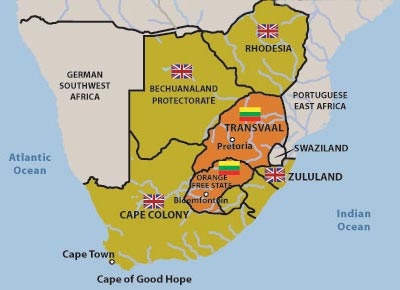 I know we didn't talk about the First Boer War ten years previously, and really, we're not going to get into the Second Boer War now. We only bring it up to address *one situation that happened in the war.
The mighty British navy was essentially blockading South Africa and the Boers there whom they were fighting. The Germans overall were sympathetic to the Boers, and Germans fought alongside them against the British, but it was not really a German-Boer alliance--it was just a small number of Germans. Going back to our eGO example for the Prussia-Germany relationship, consider this something like some of the guys from the Strat Division who play Runescape banding together towards a non-eGO-sanctioned (but also not eGO shut down...) cause.
A group of three German ships, suspected of assisting (and supplying) the Boers was stopped and searched off the coast of South Africa. Britain apologized for the exertion of force amidst the German protest, but it wasn't enough. The Germans were pissed.
The British, by their "Two-Power Standard", decided to increase the size and strength of their navy in response.
Anglo-Japanese Alliance (1902)
Britain, JapanThe thing that has bugged me most about this whole project, was that the line has to be drawn somewhere on what needs to be mentioned and when I can cut. One of the things cut was what exactly lead to the treaty between Britain and Japan (a good number of factors that would have taken a good amount of time to get into). For our purposes, however, here is what you need to know:
The British and Japanese signed a treaty. The British, worried about potential conflict with the Russians, just wanted to use the treaty to deter Russia from starting anything, since Britain "had friends". On the Japanese side, however, they felt encouraged and empowered and more free to act. This, even though the treaty didn't state that Britain would come to Japan's aid if they were to go to war with Russia.
If you wanna know what happened (or anything else--like what lead to the Anglo-Japanese Alliance lol), just ask me. I'd totally be willing to share, but it would just clutter things here.
Anyways, back to what happened. Serbian military officers formed a group called "Union or Death." They were better known as "Black Hand", but that name didn't exist at the time. They assassinated the royal family and some other high-ranking officials. There was mixed response by the Serbians. Some were relieved, and others were angry. In general, feelings internationally were unfavorable, as many nations (including both Austria and Russia) condemned the assassinations. Britain demanded that the assassins be tried and punished, but the Serbians just couldn't pull it off themselves--"Union or Death" (or its members, rather) were just too powerful.
Instead, the new King responded by removing them from their military positions. This was good enough for many nations, who resumed relations with Serbia, but not for Britain. Might you guess why? The Black Hand (I am just gonna call them that now, because they were the same guys and it flows better than "Union or Death") guys were no longer in their current positions, but they were too powerful to just remove from power. What does that leave? That's right, they were actually promoted (though, it is pertinent to note that some were given early retirement). Makes a lot of sense, huh? As a result, Black Hand continued to get more and more powerful (and bold).
 With the Russo-Japanese War imminent, Britain and France had issues. They had (remember the resolution to the Fashoda Incident?) begun to look favorably on one another, but France, allied with Russia, would be required to become involved to counter the Britain-Japan alliance. Britain would be required to become involved because of the France-Russia alliance. Yes, that's right--they were becoming involved because the other was becoming involved...because...they were becoming...involved...and so on. It was a vicious and cycle.
Unless...
Britain and France signed an agreement that more or less said, "Hey uh...so...neither of us really wants to fight the other right now, so...neither of us are getting involved in this whole thing on the other side of the world..." That's a very loose paraphrasing, by the way.
Russo-Japanese War (1904-05)
Japan v. Russia
 Japan was still bitter about the loss of the Liaodong Peninsula to Russia, wanted recognition of complete control over Korea, and would have liked part of Manchuria. Russia wanted Manchuria...and the Liaodong Peninsula...and Korea. There were genuine attempts at diplomacy and compromise, but each side wanted something more than what they currently had, so eventually there was less QQ and more pewpew.
Japan proved to be a force to be reckoned with and dealt a great series of defeats to Russia. Russia, likely, could have handled Japan, but they were facing a tumultuous revolution in 1905. Because of this Russia wanted peace, which was mediated by Theodore Roosevelt (he won a Nobel Peace Prize for it, in fact). Japan got a bit more control of Manchuria, so it was sufficient for them (for the time being, at least).
France was pretty much in control of Morocco, but was undergoing efforts to make it "official." Germany, in an effort to push the limits of the new Britain-France agreement, decided to get involved. They suspected that it wouldn't take much to make the Entente cordiale to collapse, so Germany took a strong stand in favor of Moroccan independence. Things became more and more built up between France and Germany, who each began to mobilize their forces. Germany began to sense trouble, so they drew the line in the sand at the Algeciras Conference. Their only support was Austria, while the French had the British, Russians, Italy, Spain, United States, etc. on their side. In the end Germany was pretty much forces to back down, humiliated.
In response, by policy, so did Britain.
The Pig War was less of a true war (though there was some conflict), and more of a cold war. Well, actually the official term for it was a "customs war." Pretty much Austrian-backed Serbia had one trading partner in Austria. With their autonomy, Serbia wanted to be able to import and export with anybody, but Austria didn't like to give up the control they had over the Serbs. Therefore they began to blockade Serbia and do anything they could to hurt these new efforts. Russia began to support Serbia (fellow Slavs!), and Austria didn't like it very much. The only thing that kept war from breaking out between Austria and Russia was Germany telling Russia, "Hey...stop helping Serbia." Russia responded to Germany, "Mmmmm.........ok."
Anglo-Russian Entente & Triple Entente (1907)
Britain, France, Russia
 Russia was recognizing Germany as a real threat and perhaps too much for them to be able to handle if conflict were to arise. They had some small issues with Britain, but nothing that couldn't be settled by compromise. This lead to the Anglo-Russian Entente.
This was the other thing that made the Anglo-Russian Entente a no-brainer. Britain was allied with France...and France was allied with Russia...so why shouldn't Britain be allied with Russia? Then, seeing as how all three were allied anyways, it was officially the formation of the Triple Entente.
British position: Uhhhh....us too.
A Century of War - Part 2 (1876-1900) can be found here.
Well...at least we're in the right century now! This part will cover 7 of the 14 years that take us right up to the start of The Great War. Interesting thing about that: When Otto von Bismarck was relieved of his position as German Chancellor, he later came back to Wilhelm II out of genuine concern for the state of the Empire. He was a student of history and, based on previous similar circumstances (the removal of a peacemaker as chief decision-maker), predicted that without him, there would be war in the Balkans in 20 years...and that it would spread to include most of Europe.
20 years and a few months later put the world at 1912 and the First Balkan War. But before that...
The Second Boer War (1900*)
Britain v. South African Boers
Britain v. South African Boers
The mighty British navy was essentially blockading South Africa and the Boers there whom they were fighting. The Germans overall were sympathetic to the Boers, and Germans fought alongside them against the British, but it was not really a German-Boer alliance--it was just a small number of Germans. Going back to our eGO example for the Prussia-Germany relationship, consider this something like some of the guys from the Strat Division who play Runescape banding together towards a non-eGO-sanctioned (but also not eGO shut down...) cause.
A group of three German ships, suspected of assisting (and supplying) the Boers was stopped and searched off the coast of South Africa. Britain apologized for the exertion of force amidst the German protest, but it wasn't enough. The Germans were pissed.
The Second German Naval Law (1900)
Germany
The First German Naval Law was aimed to make the Germany navy bigger. The Second German Naval Law was aimed to make it the biggest. Outraged at what had happened in South Africa, Admiral von Tirpitz felt that the only way to keep it from happening again was to construct a navy that matched the British one in size. The rest of Germany agreed with him.Germany
The British, by their "Two-Power Standard", decided to increase the size and strength of their navy in response.
More about Alfred von Tirpitz
At this time, Tirpitz was in charge of all of the German naval forces. He was perhaps the only person who wanted a larger navy than Wilhelm II did.
Recognize the name? When the mighty Bismarck-class Battleships were made, only two were ever built--the Bismarck and the Tirpitz.
Anglo-Japanese Alliance (1902)
Britain, Japan
The British and Japanese signed a treaty. The British, worried about potential conflict with the Russians, just wanted to use the treaty to deter Russia from starting anything, since Britain "had friends". On the Japanese side, however, they felt encouraged and empowered and more free to act. This, even though the treaty didn't state that Britain would come to Japan's aid if they were to go to war with Russia.
May Overthrow (1903)
Serbia
Serbia had had a long history of tumultuous reign and internal conflict, not the least of which was due to two major ruling families consistently vying for power and rule. To top that off, one was pro-Austrian and one pro-Russian. The pro-Austrian (I am not going to say any names in this whole section--trust me, it's for your own good, cause that stuff starts to get confusing) family was in charge at the time--and had been for some time. This king, through a great series of events, had pretty well ticked off a lot of people, causing more conflict for his family in regards to Russia and even his own military.Serbia
If you wanna know what happened (or anything else--like what lead to the Anglo-Japanese Alliance lol), just ask me. I'd totally be willing to share, but it would just clutter things here.
Anyways, back to what happened. Serbian military officers formed a group called "Union or Death." They were better known as "Black Hand", but that name didn't exist at the time. They assassinated the royal family and some other high-ranking officials. There was mixed response by the Serbians. Some were relieved, and others were angry. In general, feelings internationally were unfavorable, as many nations (including both Austria and Russia) condemned the assassinations. Britain demanded that the assassins be tried and punished, but the Serbians just couldn't pull it off themselves--"Union or Death" (or its members, rather) were just too powerful.
Instead, the new King responded by removing them from their military positions. This was good enough for many nations, who resumed relations with Serbia, but not for Britain. Might you guess why? The Black Hand (I am just gonna call them that now, because they were the same guys and it flows better than "Union or Death") guys were no longer in their current positions, but they were too powerful to just remove from power. What does that leave? That's right, they were actually promoted (though, it is pertinent to note that some were given early retirement). Makes a lot of sense, huh? As a result, Black Hand continued to get more and more powerful (and bold).
May Overthrow in entertainment
Power Play - This movie is not actually ABOUT the May Overthrow, but it based on it (essentially they stole they same idea).
Entente Cordiale (1904)
Britain, France
Britain, France
Unless...
Britain and France signed an agreement that more or less said, "Hey uh...so...neither of us really wants to fight the other right now, so...neither of us are getting involved in this whole thing on the other side of the world..." That's a very loose paraphrasing, by the way.
Russo-Japanese War (1904-05)
Japan v. Russia
Japan proved to be a force to be reckoned with and dealt a great series of defeats to Russia. Russia, likely, could have handled Japan, but they were facing a tumultuous revolution in 1905. Because of this Russia wanted peace, which was mediated by Theodore Roosevelt (he won a Nobel Peace Prize for it, in fact). Japan got a bit more control of Manchuria, so it was sufficient for them (for the time being, at least).
Tangier Crisis (1905-06)
Germany, Austria, Morocco v. Britain, France, Russia, Italy, Spain, United States
Did you see that "blah v. blah"? I want to make sure you did, because it looks kinda familiar, huh? If not now, it will on Monday.Germany, Austria, Morocco v. Britain, France, Russia, Italy, Spain, United States
France was pretty much in control of Morocco, but was undergoing efforts to make it "official." Germany, in an effort to push the limits of the new Britain-France agreement, decided to get involved. They suspected that it wouldn't take much to make the Entente cordiale to collapse, so Germany took a strong stand in favor of Moroccan independence. Things became more and more built up between France and Germany, who each began to mobilize their forces. Germany began to sense trouble, so they drew the line in the sand at the Algeciras Conference. Their only support was Austria, while the French had the British, Russians, Italy, Spain, United States, etc. on their side. In the end Germany was pretty much forces to back down, humiliated.
Third German Naval Law (1906)
Germany.
Following their embarrassment in Morocco, Germany decided that they were gonna need a bigger boat. Er, wait, that's JAWS. They decided that they were going to need more ships.Germany.
In response, by policy, so did Britain.
The Pig War (1906-09)
Serbia v. Habsburg Empire (Austria)
This isn't an entirely accurate comparison, but think of Habsburg-Austria as Prussia-Germany, k? Now that I have that out of the way, the Pig War was against the Habsburg Empire, but I am going to say Austria because I am lazy (and it fits in with the events leading up to WWI).Serbia v. Habsburg Empire (Austria)
The Pig War was less of a true war (though there was some conflict), and more of a cold war. Well, actually the official term for it was a "customs war." Pretty much Austrian-backed Serbia had one trading partner in Austria. With their autonomy, Serbia wanted to be able to import and export with anybody, but Austria didn't like to give up the control they had over the Serbs. Therefore they began to blockade Serbia and do anything they could to hurt these new efforts. Russia began to support Serbia (fellow Slavs!), and Austria didn't like it very much. The only thing that kept war from breaking out between Austria and Russia was Germany telling Russia, "Hey...stop helping Serbia." Russia responded to Germany, "Mmmmm.........ok."
Anglo-Russian Entente & Triple Entente (1907)
Britain, France, Russia
You should recognize this from...
In math there is something called the Transitive Property:
If A = B and B = C, then A = C
My favorite part is imagining you guys thinking 'where are you going with this, YSD?' Well...keep reading...
This was the other thing that made the Anglo-Russian Entente a no-brainer. Britain was allied with France...and France was allied with Russia...so why shouldn't Britain be allied with Russia? Then, seeing as how all three were allied anyways, it was officially the formation of the Triple Entente.
Fourth German Naval Law (1908)
Germany.
German position: Uh oh, looks like we have more potential enemies. I think we need more boats.Germany.
British position: Uhhhh....us too.