- Joined
- Aug 2, 2009
- Messages
- 2,019
Welcome to the first part of my "Year Through WWII" series.
"Wait, WWII? But the title said '1848-1875'...World War II started in 1939."
True, but things of this magnitude don't just start overnight on a whim, so we need to find
??? ---> WWI + ??? ---> WWII
They were not alone. Due to the "Holy Land" being a part of the Ottoman Empire's territories, the British, French and Italians were also interested in the region and did not particularly care to see it fall into Russian hands. As a result, they all joined forces with the Ottoman Empire to fight back the Russians, victorious in the end. The famous Treaty of Paris marked the end of this war.
With that in mind, understand that it was no typo when I said the Franco-Prussian war was between France and the Germans. France and Prussia had fought for many years in the Napoleonic Wars. Now Prussia had been progressively adding to their ranks more and more smaller German nations/groups/tribes/etc. They were growing quickly and needed more territory in which to expand. With water to the North, Russia to the East, and Austria to the South, they wanted some territory on the West, which currently was in France's struggling hands. They were facing revolution and had many political problems internally that would come to a boil unless they could focus their attention (and perhaps anger?) towards an outside source. Essentially, things were so bleak that it appeared only war could save France.
Even that possibility seemed less-than-ideal, unless the French could find allies. However, nearly every power in the world
A) Sided with Germany
B) Were against France
C) Had just lost their own war(s) to Prussia and were afraid to face them again
D) Some combination thereof
There was one exception to all of this--Austria. Austria would have loved to pay back the Prussians for their defeat just four years previously, and were on the side of the Polish (to be addressed next) but there was a problem with that potential alliance.
In Prussia's cultivating and "regathering" of the Germanic tribes, they also made some efforts to assist the Russians in their own reunification--in the process oppressing Polish insurgents to both actions. The Prussians, are of the possibility of a French-Austrian alliance, sought alliance with Russia, utilizing their new-found favor. Russia's Tsar Alexander II had recently visited France and, due to a series of small, unfortunate, events, developed his father's distaste for the French people (which perhaps had biased him from the start). These two factors, combined with the memory of fighting the French and Austrians in the Crimean War (included in that memory was likely Prussia's LACK of involvement against Russia), lead Russia to agree to an alliance. If Austria were to side with France, then Russia would come to the aid of the Germans.
Austria could not afford to fight a war with both Prussia and Russia, so they stayed uninvolved. In the end, the Prussians won and took several regions of France for their own new German Empire. These areas included a huge portion of France's industrial abilities. Polish people within this new empire were unhappy with their treatment before and after the war, leading to many angry, violent, protests and for many Poles to desert the Prussian military. Whereas previous oppression of the Polish might have been argued as less "anti-Polish" and more "pro-German", these new actions caused much tension between Germany and the Polish people. It is no secret that this is not the last we will hear about this tension.
Realizing that they were in essentially the same position (especially after so much recent conflict with France), Germany sought to seek an alliance with these two. After all, they had been allies with either Austria or Russia already, and within the last decade, so it wasn't too far-fetched. The skilled German leader and diplomat Otto von Bismarck convinced both sides, just a few months later in October of 1873, to form the League of the Three Emperors.
It was an unmatched and seemingly invincible alliance...until 1875. Curiously enough, the events in reference there are when the Serbians began to clash with the Bulgarians (both currently parts of the Ottoman Empire).
"Wait, WWII? But the title said '1848-1875'...World War II started in 1939."
True, but things of this magnitude don't just start overnight on a whim, so we need to find
??? ---> WWI + ??? ---> WWII
First Italian War of Independence (1848-49)
Italy v. Austria
Over time the Austrian Empire had grown and expanded to include regions of Northern (Northeastern) Italy. The Italians of these regions, desiring to no longer be under Austrian rule, revolted. However, without any assistance, the fight proved to be too difficult for the Italians to wage on their own and they were rather easily defeated.Italy v. Austria
The Crimean War (1853-56)
Ottoman Empire + France + Britain + Italy v. Russia

The Ottoman Empire, with a diminished desire to continue expansion, began to grow stagnant and then gradually decline. The Russians had spent a century at war with the Ottoman Empire, so this decline was the perfect opportunity for their war to continue, as the Russians wanted the Ottoman's land.Ottoman Empire + France + Britain + Italy v. Russia
They were not alone. Due to the "Holy Land" being a part of the Ottoman Empire's territories, the British, French and Italians were also interested in the region and did not particularly care to see it fall into Russian hands. As a result, they all joined forces with the Ottoman Empire to fight back the Russians, victorious in the end. The famous Treaty of Paris marked the end of this war.
Why you might have heard of The Crimean War
"The Charge of the Light Brigade"

This was a poem written by Alfred Lord Tennyson about the infamous "charge of the light brigade" by the English in the Battle of Balaclava during the Crimean War. Amongst numerous references in film, you probably most recently heard it in the movie The Blind Side.
Half a league, half a league,
Half a league onward,
All in the valley of Death
Rode the six hundred.
"Forward, the Light Brigade!
Charge for the guns" he said:
Into the valley of Death
Rode the six hundred.
More about Florence Nightingale
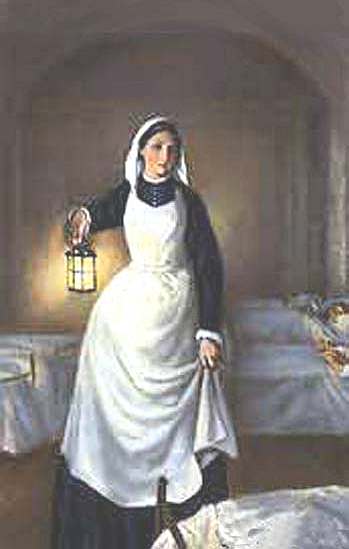
This is probably one of those names you know you have heard, but have no idea who she is. Florence Nightingale was an English nurse during the Crimean War who, by her tending to wounded soldiers, was the prototype to the modern-day nurse. In fact, all new nurses must take the "Nightingale Pledge" upon becoming a nurse.
The Crimean War in entertainmentBalaclava
The Charge of the Light Brigade
The Charge of the Light Brigade (1968)
Florence Nightingale
Second Italian War of Independence (1859)
Italy + France v. Austria
When Italy involved themselves in the Crimean War, they essentially got an ally (even if a temporary one) in France. Therefore, when the Second Italian War of Independence broke out, the people of Sardinia were not alone. This lead to far more successful offensives, thanks to the help of Napoleon III and the French forces. The French/Italian pairing beat back the Austrians so far that France was afraid that the Germanic tribes would get involved if they kept pushing too hard. Therefore, they signed an armistice with Austria, in which Austria gave up their Italian holdings (back to Italy, of course). For their help, the French were given portions of Northwestern Italy that had previously been French.Italy + France v. Austria
More insight on Napoleon III

France and Italy were not the only nations against Russia in the Crimean War, so why was it France, of all countries who came to their aid?
Napoleon III's Uncle was the famous Napoleon I, or Napoleon Bonaparte. After Bonaparte's defeats in 1815, the control of France went back to the House of Bourbon and their monarchy, forcing Bonaparte and his family into exile. Napoleon III grew up in Northern Italy and eventually joined the 'Carbonari'--a organization who fought against Austria's gradual takeover of Northern Italy. The pair of brothers were even forced to flee Italy in 1831, during which Napoleon III's brother contracted measles and eventually died in his arms.
Second Schleswig War (1864)
Prussia + Austria v. Denmark
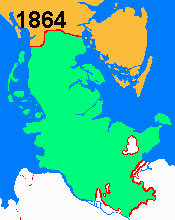
In previous confrontations the Prussians and Austrians had been allies against the Danish, so when the Prussians went to war with Denmark, Austria jumped on board. In the end, this "German Confederation" won and the Schleswig region was again under German control.Prussia + Austria v. Denmark
Austro-Prussian War (The "7 Weeks War") & Third Italian War of Independence (1866)
German Confederation (Austria and multiple smaller Germanic groups) v. Prussia + Italy + multiple smaller Germanic and Italian groups

BLUE = Prussia and allies (light) RED = Austria and allies (light) GREEN = Neutral tribes YELLOW = Contested zones
The Schleswig War put the Schleswig-Holstein region under the control of the German Confederation (chiefly Austria and Prussia). There were ensuing debates over the region (mainly) that continued to escalate until Otto von Bismark (the First Chancellor of Germany) approached Italy with an offer of alliance. If Prussia were to go to war with Austria, Italy would be their ally. It made sense, since the Italians had recently built up a history of fighting the Austrians. Since the Prussians didn't get involved with the Second War of Italian Independence (though likely could have come to the aid of their Germanic "brethren"), Italy agreed. Much of Europe was unable to get involved due to various treaties and Russia could have gotten involved, but they were still bitter about the Crimean War and didn't much care for either the Austrians or the Italians. In fact, this bitterness (hate?) not only prevented the escalation of the war but also directly lead to the end of it. Prussia and Austria reached a peace agreement in the middle of hostilities (after just seven weeks of fighting), afraid of the involvement of either Russia or France. In their minds, it was better to succumb to a fellow Germanic tribe/peoples than a completely non-Germanic nation. Austria agreed to break up the German Confederation and to release many small Germanic states to Prussia, who then formed the North German Confederation. Prussia was more or less winning the war by the time peace was made, but they did not request any Austrian lands. This lead to rather good terms by both sides with each other upon the end of the war..German Confederation (Austria and multiple smaller Germanic groups) v. Prussia + Italy + multiple smaller Germanic and Italian groups
BLUE = Prussia and allies (light) RED = Austria and allies (light) GREEN = Neutral tribes YELLOW = Contested zones
Imperialism (1867-??)
Britain, France, Germany, Russia, etc. etc.
There was a huge boom following the end of the Crimean War where nations such as Britain and France (along with Germany, Austria-Hungary, Italy and Russia--mainly) sought to expand their reaches across the world to acquire more resources, since each nation was pretty well limited in what they had or could produce. The nations began to expand into Africa and Asia as a result of this, naturally leading to increased tensions, thanks to the new arena of competition.Britain, France, Germany, Russia, etc. etc.
Franco-Prussian War (1870-71)
France v. Germany

It is not entirely accurate to say Germans = Prussians when looking back in history. The "Germans" actually refer to all Germanic people, of which the Prussians are one (a major one). Not all Germans are Prussians though. Think of Germans = eGO and Prussians = DoD:S Division. We might think we are synonymous with eGO and all other divisions are inferior, and we have the longest history, but not everything eGO has done was done by DoD:S.France v. Germany
With that in mind, understand that it was no typo when I said the Franco-Prussian war was between France and the Germans. France and Prussia had fought for many years in the Napoleonic Wars. Now Prussia had been progressively adding to their ranks more and more smaller German nations/groups/tribes/etc. They were growing quickly and needed more territory in which to expand. With water to the North, Russia to the East, and Austria to the South, they wanted some territory on the West, which currently was in France's struggling hands. They were facing revolution and had many political problems internally that would come to a boil unless they could focus their attention (and perhaps anger?) towards an outside source. Essentially, things were so bleak that it appeared only war could save France.
Even that possibility seemed less-than-ideal, unless the French could find allies. However, nearly every power in the world
A) Sided with Germany
B) Were against France
C) Had just lost their own war(s) to Prussia and were afraid to face them again
D) Some combination thereof
There was one exception to all of this--Austria. Austria would have loved to pay back the Prussians for their defeat just four years previously, and were on the side of the Polish (to be addressed next) but there was a problem with that potential alliance.
In Prussia's cultivating and "regathering" of the Germanic tribes, they also made some efforts to assist the Russians in their own reunification--in the process oppressing Polish insurgents to both actions. The Prussians, are of the possibility of a French-Austrian alliance, sought alliance with Russia, utilizing their new-found favor. Russia's Tsar Alexander II had recently visited France and, due to a series of small, unfortunate, events, developed his father's distaste for the French people (which perhaps had biased him from the start). These two factors, combined with the memory of fighting the French and Austrians in the Crimean War (included in that memory was likely Prussia's LACK of involvement against Russia), lead Russia to agree to an alliance. If Austria were to side with France, then Russia would come to the aid of the Germans.
Austria could not afford to fight a war with both Prussia and Russia, so they stayed uninvolved. In the end, the Prussians won and took several regions of France for their own new German Empire. These areas included a huge portion of France's industrial abilities. Polish people within this new empire were unhappy with their treatment before and after the war, leading to many angry, violent, protests and for many Poles to desert the Prussian military. Whereas previous oppression of the Polish might have been argued as less "anti-Polish" and more "pro-German", these new actions caused much tension between Germany and the Polish people. It is no secret that this is not the last we will hear about this tension.
The Franco-Prussian War in entertainmentLa commune
League of the Three Emperors (1873)
Austria, Germany, Russia
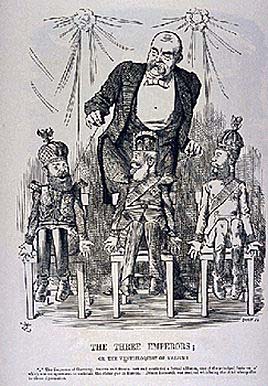
While just three years earlier the Russians might or might not have been remembering Austria's involvement in the Crimean War, by now both sides realized they had many enemies in common. Mainly concerned with possible retaliatory or expansion actions from the "conservative" nations, Austria and Russia signed the Schonbrunn Convention in June of 1873.Austria, Germany, Russia
Realizing that they were in essentially the same position (especially after so much recent conflict with France), Germany sought to seek an alliance with these two. After all, they had been allies with either Austria or Russia already, and within the last decade, so it wasn't too far-fetched. The skilled German leader and diplomat Otto von Bismarck convinced both sides, just a few months later in October of 1873, to form the League of the Three Emperors.
It was an unmatched and seemingly invincible alliance...until 1875. Curiously enough, the events in reference there are when the Serbians began to clash with the Bulgarians (both currently parts of the Ottoman Empire).
Last edited: